Running for More Than a Finish Line

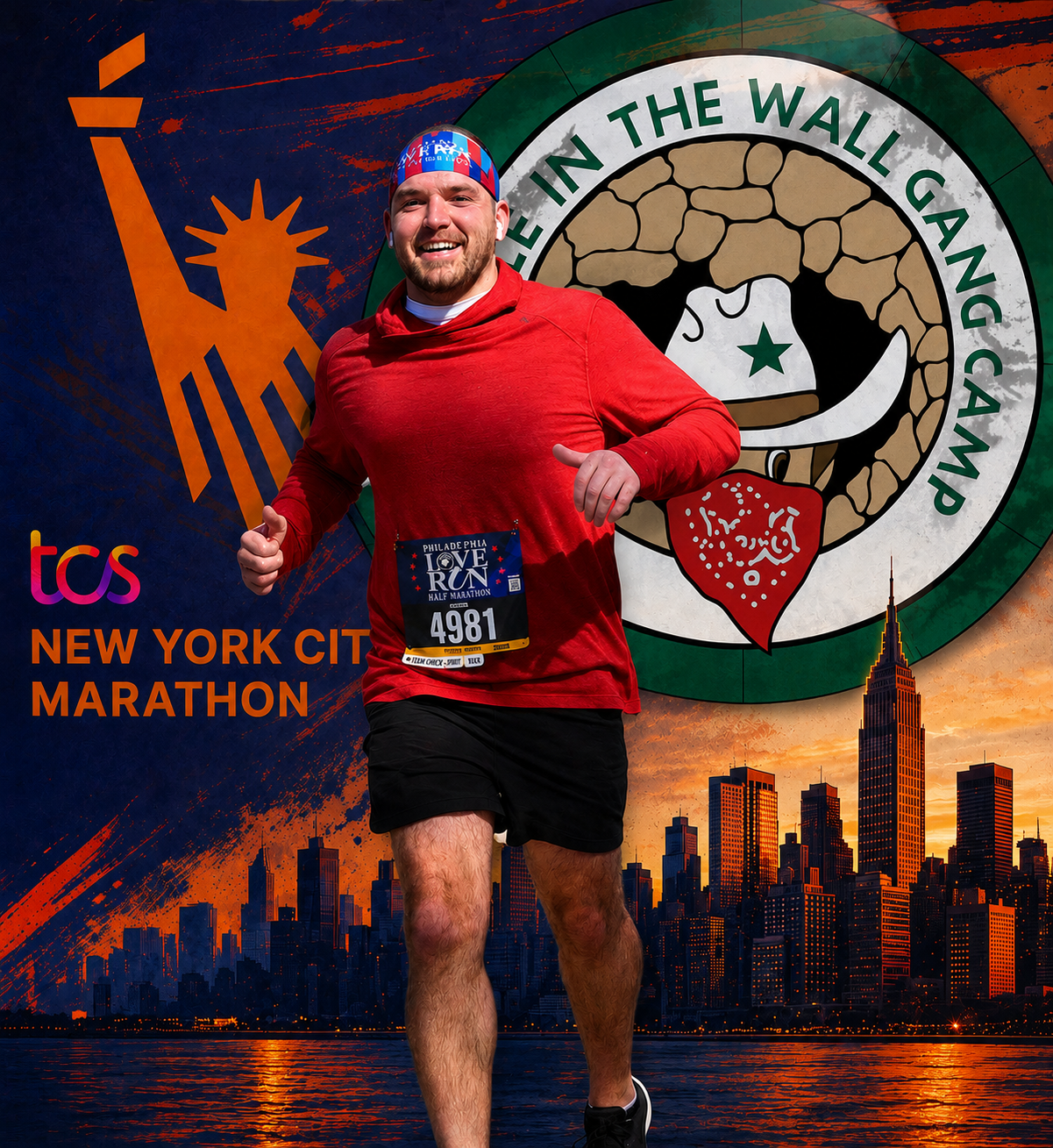
Liam O'Neill has wanted to run the New York City Marathon for as long as he can remember. This November, he will finally get his chance, and he is using it to give back to a cause that shaped who he is.

O'Neill, a member of the Epsilon Omega Chapter at Shepherd University and a 2017 graduate, will run the marathon this fall while raising funds for Camp Hole in the Wall Gang, the longtime philanthropic partner of Phi Kappa Tau. His goal is to raise $5,000 to help more children experience the camp's signature blend of joy, friendship and confidence.

Phi Kappa Tau is more than an organization in the O'Neill family. His father and grandfather were both members of the Alpha Gamma Chapter at the University of Delaware, giving Liam a connection to the Fraternity that began long before he ever arrived at Shepherd. Once there, he served as Chapter Chaplain and Fundraising Chairman, leading efforts in support of the camp during his undergraduate years.

Those experiences stayed with him.

"Camp Hole in the Wall was a major part of my Phi Tau experience," O'Neill said. "My fraternity brothers and I spent countless hours raising money for the camp, and seeing the impact it had on children and their families always hit home for me. Being able to support the same cause today feels incredibly meaningful."

The marathon, for O'Neill, is less a race than a reunion with the values he first practiced in college. What his chapter helped build through fundraisers and events years ago, he is now continuing on his own terms, 26.2 miles at a time through the streets of New York City.

Camp Hole in the Wall Gang serves children with serious illnesses and their families, providing transformative experiences at no cost. O'Neill's fundraising directly supports that mission and reflects the kind of ethical leadership and exemplary character that Phi Kappa Tau aims to develop in every member.

Interested in following his journey? Keep an eye on O’Neill’s fundraising progress here as the marathon approaches.

Want a Stronger Board of Governors? Build Your Graduate Council First

For most chapters, the Board of Governors is the only alumni organization they ever really think about. The BoG advises the undergraduates on finance, recruitment, scholarship, and risk management — vital work. But here is what decades of serving Alpha Rho has taught me: a strong Board of Governors is not something you conjure out of thin air. It is the natural by-product of an active, well-run Graduate Council.

Every chapter already has a Graduate Council — the Constitution says so. The trouble is that most exist in name only. When Alpha Rho was suspended in 2014, we needed to rally brothers and raise money for an eventual rechartering, and the Graduate Council became the engine that did it. Along the way we learned that the Graduate Council does something the BoG cannot: it keeps hundreds of alumni informed, connected, and invested. Those engaged alumni are exactly the brothers who later raise their hands to serve on the BoG and House Corporation.

So if you want a deep bench of BoG volunteers, start by building the thing that creates them.

Four building blocks

It takes surprisingly little to begin — a few dedicated alumni and four essentials:

  • Officers. Start with just a President, Treasurer, and Secretary. Their first task is to draft bylaws and submit them to National HQ — the step that makes the Council your chapter’s official alumni body and seats your delegate at National Convention.

  • An online presence. Reserve a domain (ours is arpkt.org) and build a simple site. Google Sites is free and ties into Google Drive, Docs, and Groups; we keep our alumni directory in a shared Google Doc spreadsheet with several editors.

  • A way to communicate. Email is king. Social media platforms come and go, but every working professional checks email. A free, moderated Google Group keeps the conversation going and the spammers out.

  • A way to raise money. Make giving effortless. A PayPal account lets alumni give by credit card, including small recurring gifts — our “100-for-10” campaign solicits alumni to donate a minimum of $10 a month. Once engaged with the chapter, those same alumni can become a base of support for future fundraising.

Put that engagement to work

Money and communication are the means, not the end. Alpha Rho’s Graduate Council pays for tailgates, Homecoming, and Founders Day; funds rush and semester scholarships; reimburses actives and our elected delegate for Convention and leadership events; and even prints custom chapter swag. We hold monthly Zoom meetings open to any brother, and broadcast two live meetings a year from Manuel’s Tavern. None of this requires officers to live near campus — almost all of it happens online.

The payoff goes well beyond social events. Since 2014 the Council has received tens of thousands of dollars in alumni donations, and that momentum has made far bigger things possible. We recently raised more than $50,000 to endow the James P. Chambers Scholarship Fund, and we are now in the middle of a $400,000 campaign to enable the House Corporation to renovate the chapter house. Neither effort would exist without the Graduate Council. And when alumni see what their gifts accomplish, brothers we had not heard from in years reach out to us. That re-engaged base is where future BoG and House Corporation volunteers come from — and the actives, watching all of it, learn how alumni are supposed to show up once they graduate.

A word to brothers everywhere

Here is something most Phi Taus rarely consider: you can serve a chapter other than your own.

Thanks to Zoom and similar tools, none of this work has to happen in person — the Board of Governors and House Corporation can welcome remote participants just as readily as the Graduate Council does. So your skills — writing, web design, accounting, fundraising — can help a struggling chapter three states away as easily as your own. If you have ever wanted to give back but had no local chapter to give back to, this is your opening. Reach out to a chapter near you, or to one that simply needs the help.

A thriving chapter rarely begins with a thriving Board of Governors. It begins with a Graduate Council that keeps alumni close. Build that first, and the volunteers, the funds, and a strong Board will follow.

Building Bridges in Florida

How one alumnus is connecting Brothers across the Sunshine State 

As an undergraduate at Old Dominion University, Paul Johnston, Gamma Tau ’07, spent a lot of time thinking about what it meant to be a member of Phi Kappa Tau. He and his chapter brothers were part of a colony, which meant they wouldn't be initiated until the colony officially chartered. That waiting period gave him time to dig into the fraternity's materials, searching for something that captured the spirit of the brotherhood he was building toward. 

He found it in a poem.

“Bridge Builder" by Will Allen Dromgoole tells the story of an old man who, after crossing a deep chasm, turns back to build a bridge for those who will follow. For Johnston, the poem became a quiet compass, one that would guide him well beyond his college years in Norfolk, Virginia.

“That poem felt central to my undergraduate experience," Johnston said. “It stayed with me long after I left campus."

A Lesson in What Gets Lost

One of the draws of Old Dominion was its proximity to the beach. Students came from across Virginia for a change of scenery, but many left the area after graduation, returning to hometowns closer to the mountains or the capital. Without a strong local alumni base to sustain it, the chapter eventually closed, less than a decade after it chartered.

It was a hard lesson, but one that planted a seed.

Finding the Way Back

Years later, after building a career and settling in Florida, Johnston felt a pull to reconnect with Phi Kappa Tau. He just wasn't sure how to start.

With a background in mid-level management and a comfort with raw data, Johnston got to work. He started by calling the first 100 brothers closest to him. As anyone who's tried cold-calling can imagine, most calls went to voicemail. Calling was time-consuming, required detailed tracking notes and was prone to errors. It wasn't working. 

Texting felt too informal for a first introduction, especially without knowing which numbers were cell phones versus landlines. Email seemed like the better option, but Johnston knew he needed more than an introduction. He needed a call to action.

Building the Bridge

"If I just sent an email introducing myself, the relationship stays between me and that brother," Johnston said. "But what if we could grow a network instead? What if all 2,000 brothers in Florida could communicate with one another, instantly?"

He chose WhatsApp as the platform, prioritizing ease of access. The simpler it was to join, the more likely brothers would show up. He began sending personalized emails with a link to the group, copy-and-pasting his way through the roster. He quickly discovered Gmail's daily sending limit: 200 emails.

He kept going.

A Network Takes Shape

Since launching the effort in August, the group has grown to 80 members, including Chief Alumni and Housing Officer Chris Parthemore and Past National President Dale Holland. 

More importantly, the connections are real. Brothers are reconnecting with old friends and making new ones. The group isn't built around any single chapter. It's open to all active members in the state.

"I've been pleasantly surprised with how many brothers have taken to communicating on this platform," Johnston said. "We're not just reconnecting. We're building something new."

Looking ahead, Johnston sees the network growing into a hub for business networking, shared interests, local events and group outings. The key is having everyone on one platform where communication is instant and accessible.

The Old Man and the Bridge

Johnston often finds himself thinking back to that poem from his undergraduate days, wondering if he's become the old man in the story, building a bridge so others can cross a little more easily.

*"He, too, must cross in twilight dim,*

*Good friend, I am building*

*This bridge for him."* 

If you'd like help starting your own bridge, reach out to Paul Johnston directly at PaulAJohnstonJr@gmail.com or (813) 895-4789.

Honoring Our Founders: They Chose Something Better

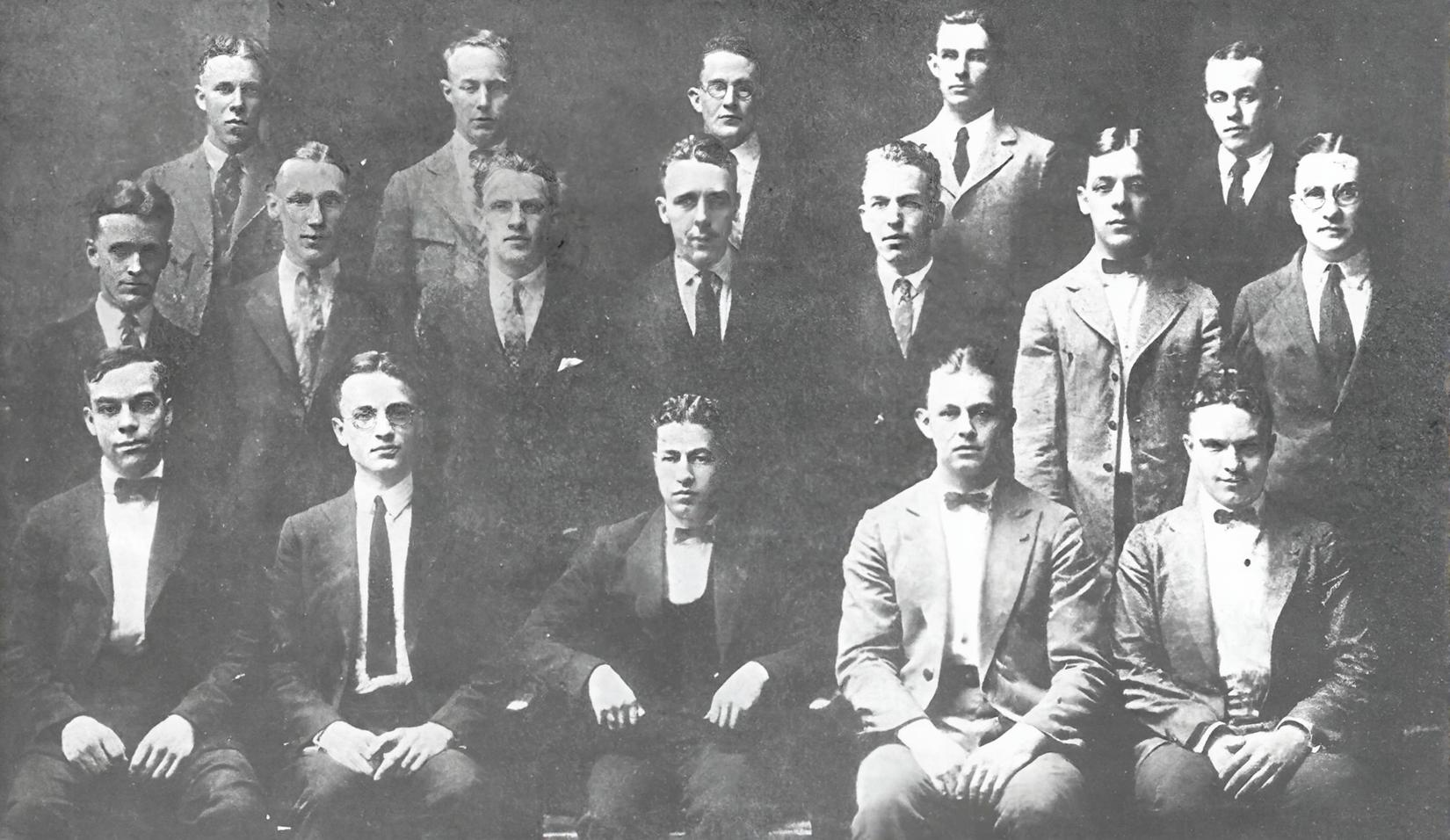
On Founders Day, we remember four men who refused to accept the way things were — and built something that has lasted more than a century.


On the night of March 17, 1906, two college students found their way into the wrong office at Miami University.

They weren’t there to cause trouble. They were there to change everything.

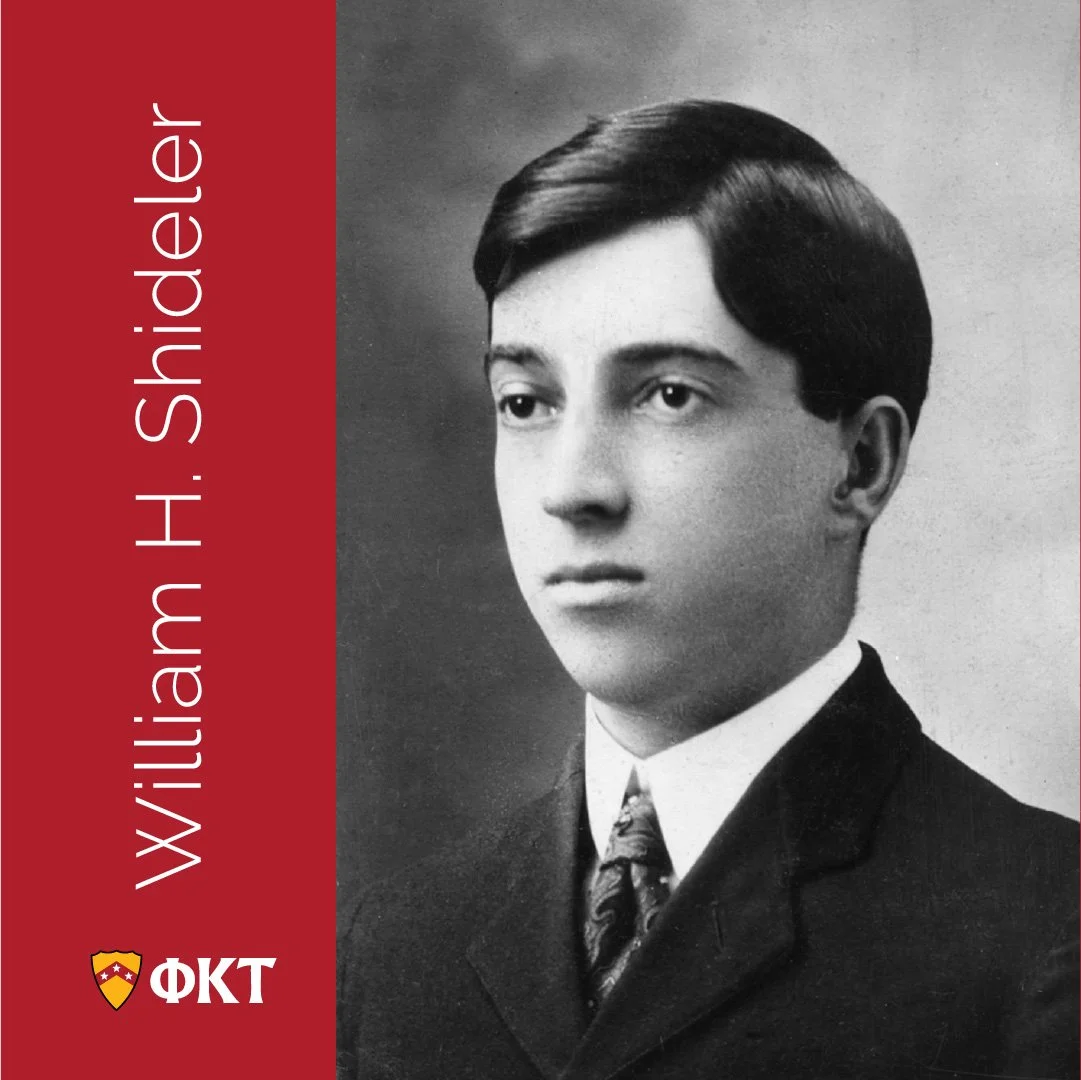
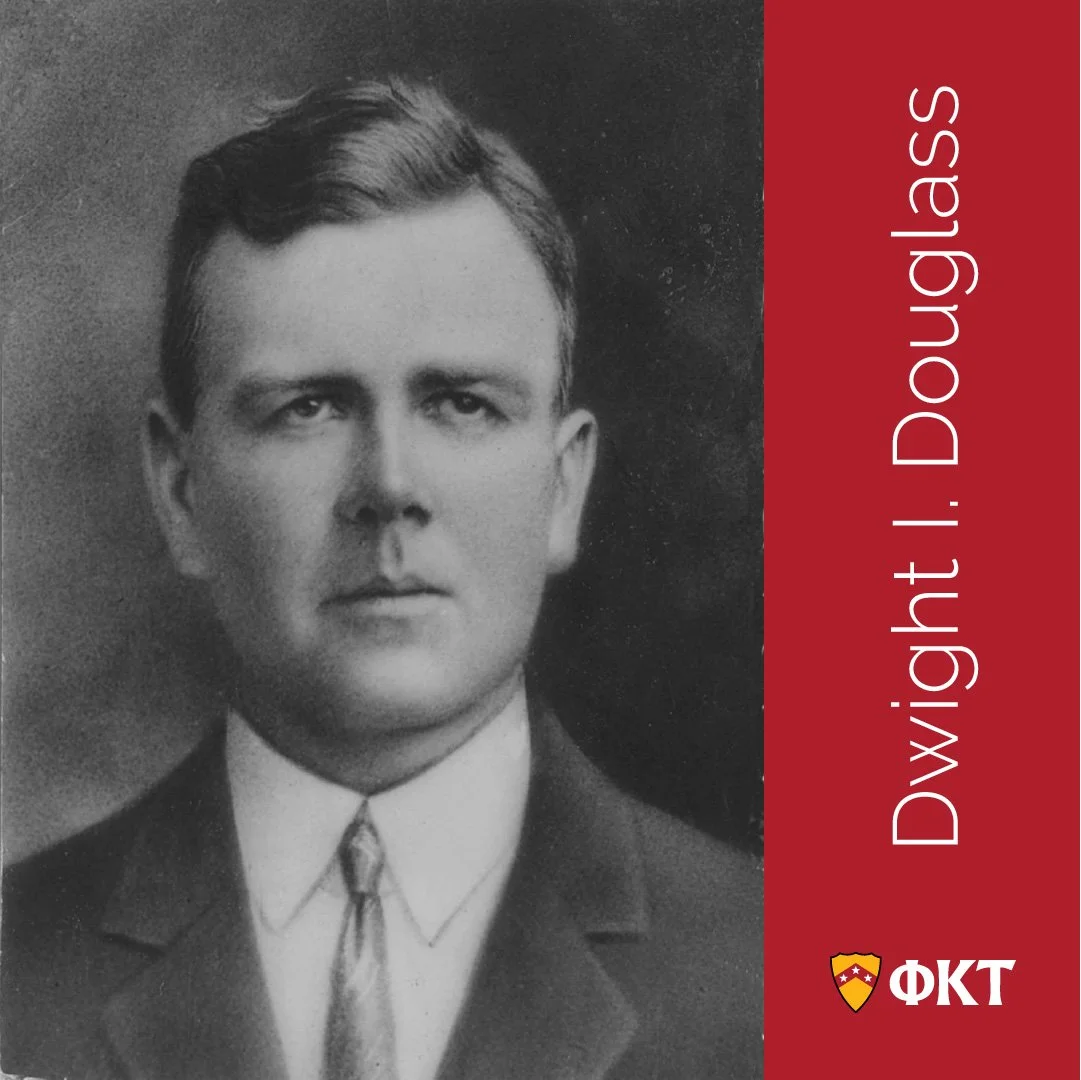
William Shideler and Dwight Douglass had come back to campus early from spring break, restless with an idea they couldn’t shake. They made their way into Old Main, tried a few doors, and slipped into the one room that happened to be unlocked: the office of Dean Hepburn. Douglass settled into the dean’s chair, helped himself to one of the cigars he found in the desk, kicked his feet up, and said to Shideler, “Well, Doc, let’s see what you have.”

What they had was a vision. And when Dean Hepburn walked in on them mid-conversation, cigar smoke curling under the door, he didn’t send them away. He listened. Then he said, “Well boys, I wish you all the success in the world.”

Two weeks later, 21 men climbed the steps of Old Main to become the Non-Fraternity Association. Phi Kappa Tau was born.

Why It Happened

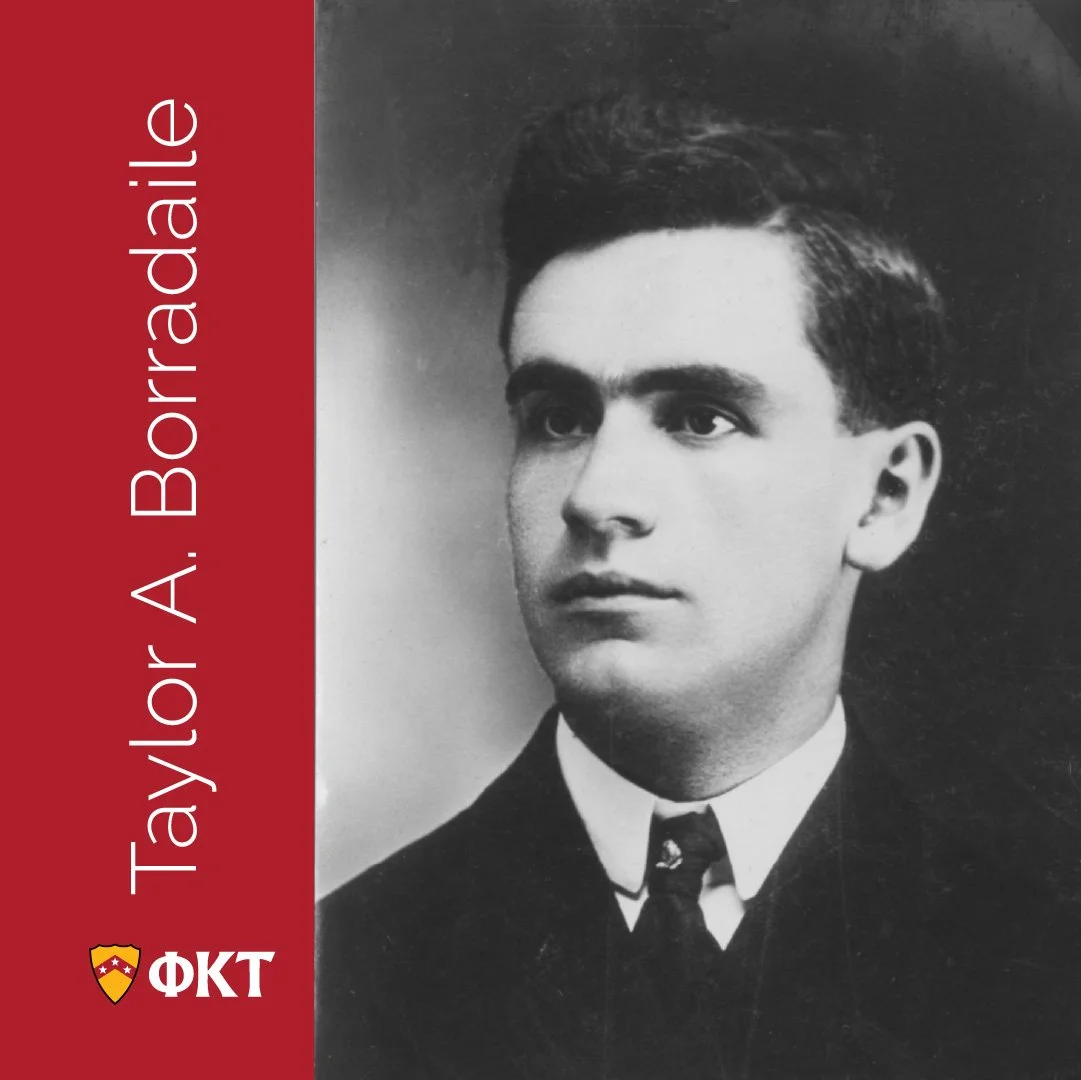
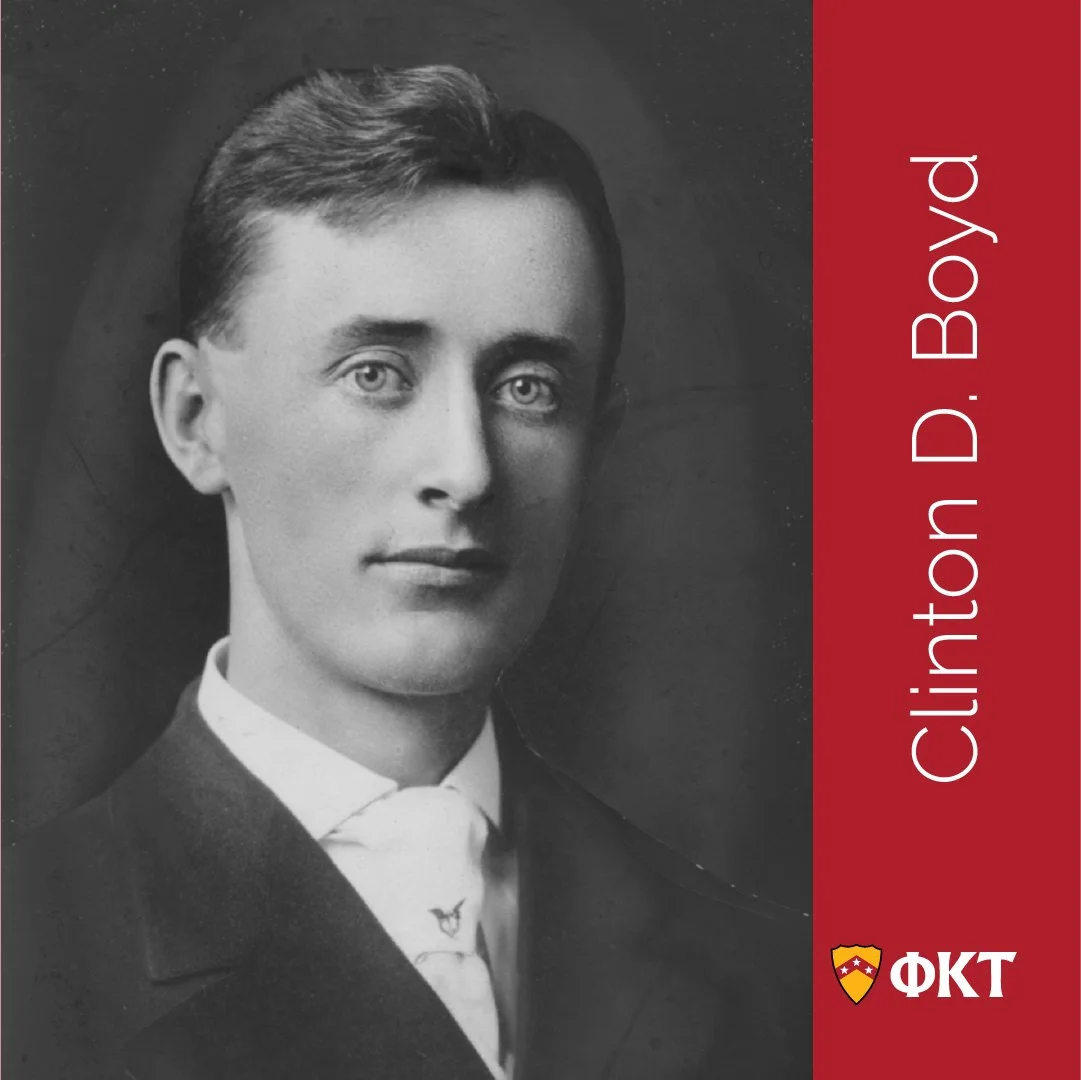
The story behind that night is worth knowing, because it makes what Shideler, Douglass, Taylor Borradaile, and Clinton Boyd built mean a lot more.

In the early 1900s, three fraternities controlled campus life at Miami University. If you weren’t in one of them, you were largely shut out — from athletics, from student government, from any meaningful role on campus. The track meet of March 1905 made that painfully clear. Shideler and Douglass coached an unaffiliated team that year. The fraternity men colluded and swept the competition. Their runners didn’t place.

That was the moment something shifted.

Over the following months, the four men organized non-fraternity students into political coalitions and competed in campus elections. They won some. They lost some. But when Borradaile and Douglass showed up to a meeting called by Miami’s president to address the tension on campus, they were told something that crystallized everything: without a formal organization behind them, they didn’t represent anyone.

So they built one.

They didn’t call it a fraternity. They called it a Non-Fraternity Association, because the fraternities of their day had come to represent exclusion, entitlement, and politics over people. What they wanted was the opposite: a community built on genuine brotherhood, open to men who earned their place in it, with no shortcuts and no gatekeeping.

The Values That Founded Us Are Still the Point

More than 100 years later, that original instinct is still the DNA of Phi Kappa Tau.

The men who founded this fraternity weren’t the most powerful men on campus. They were the ones who saw something wrong and decided to fix it. They weren’t motivated by status. They were motivated by belonging — by the belief that every man deserves a community where he can compete, contribute, and grow, regardless of who he knew walking in the door.

That’s still what Phi Kappa Tau asks of its members today. The Strategic Plan isn’t just a document. Recruitment growth isn’t just a number. New staff, new programs, and new chapters — all of it traces back to that same original commitment: building something real for men who want to be part of something bigger than themselves.

The founders didn’t have a playbook. They had each other and a conviction that it was worth doing right. And on a cold March night in Ohio, they sat down in a borrowed office and got started.

Here’s what the history books don’t quite capture: the founders eventually became alumni, too. At some point, every one of them walked off the Miami campus for the last time as an undergraduate. So did the men who came after them, chapter by chapter, decade by decade. Each one left something behind — not just memories, but a living organization that the next generation would inherit and make their own.

That line has never broken. It runs through every chapter, every initiation, every conversation in a chapter house that turned into something a brother still thinks about years later. It runs through you, wherever you are in it.

For the Undergraduate: You’re Part of What They Started

Founders Day is more than a date on the calendar. It’s a reminder of where this fraternity comes from and what it has always stood for.

Shideler, Douglass, Borradaile, and Boyd weren’t famous men. They were students, just like you, who decided that what they were building mattered. The brotherhood they started has now spanned more than a century, hundreds of campuses, and hundreds of thousands of men.

You are part of that line.

On March 17, take a moment to think about what they handed you — not a name, not letters, not a social calendar — but a brotherhood with a purpose. And then ask yourself what you’re going to do with it.

That’s what the founders would have asked, too.

For the Alumnus: You Helped Build It for Them

As an alumnus, Founders Day hits differently.

You’re not being asked to imagine what you’ll do with what the founders built. You already know. You lived it. You took it somewhere, used it in ways you probably didn’t expect, and carried the values of this fraternity into a career, a family, a community — whether you think about it that way or not.

What Founders Day asks of you now is simpler: remember it.

Remember what it felt like to belong to something that asked something real of you. Remember the brothers who pushed you, the experiences that shaped you, and the version of yourself who showed up because of Phi Kappa Tau.

Shideler himself returned to the Miami campus and served on the faculty for many years, staying involved with the chapter there for most of his life. He stayed connected because what they built still mattered to him.

If it still matters to you, stay connected too. The fraternity our founders started 120 years ago is still being built. The men building it today could use the reminder that what they’re part of has always been worth the effort.

That’s something only you can give them.

Our Founders Chose Something Better

On Founders Day, we remember four men who refused to accept the way things were — and built something that has lasted more than a century.


On the night of March 17, 1906, two college students found their way into the wrong office at Miami University.

They weren’t there to cause trouble. They were there to change everything.

William Shideler and Dwight Douglass had come back to campus early from spring break, restless with an idea they couldn’t shake. They made their way into Old Main, tried a few doors, and slipped into the one room that happened to be unlocked: the office of Dean Hepburn. Douglass settled into the dean’s chair, helped himself to one of the cigars he found in the desk, kicked his feet up, and said to Shideler, “Well, Doc, let’s see what you have.”

What they had was a vision. And when Dean Hepburn walked in on them mid-conversation, cigar smoke curling under the door, he didn’t send them away. He listened. Then he said, “Well boys, I wish you all the success in the world.”

Two weeks later, 21 men climbed the steps of Old Main to become the Non-Fraternity Association. Phi Kappa Tau was born.

Why It Happened

The story behind that night is worth knowing, because it makes what Shideler, Douglass, Taylor Borradaile, and Clinton Boyd built mean a lot more.

In the early 1900s, three fraternities controlled campus life at Miami University. If you weren’t in one of them, you were largely shut out — from athletics, from student government, from any meaningful role on campus. The track meet of March 1905 made that painfully clear. Shideler and Douglass coached an unaffiliated team that year. The fraternity men colluded and swept the competition. Their runners didn’t place.

That was the moment something shifted.

Over the following months, the four men organized non-fraternity students into political coalitions and competed in campus elections. They won some. They lost some. But when Borradaile and Douglass showed up to a meeting called by Miami’s president to address the tension on campus, they were told something that crystallized everything: without a formal organization behind them, they didn’t represent anyone.

So they built one.

They didn’t call it a fraternity. They called it a Non-Fraternity Association, because the fraternities of their day had come to represent exclusion, entitlement, and politics over people. What they wanted was the opposite: a community built on genuine brotherhood, open to men who earned their place in it, with no shortcuts and no gatekeeping.

The Values That Founded Us Are Still the Point

More than 100 years later, that original instinct is still the DNA of Phi Kappa Tau.

The men who founded this fraternity weren’t the most powerful men on campus. They were the ones who saw something wrong and decided to fix it. They weren’t motivated by status. They were motivated by belonging — by the belief that every man deserves a community where he can compete, contribute, and grow, regardless of who he knew walking in the door.

That’s still what Phi Kappa Tau asks of its members today. The Strategic Plan isn’t just a document. Recruitment growth isn’t just a number. New staff, new programs, and new chapters — all of it traces back to that same original commitment: building something real for men who want to be part of something bigger than themselves.

The founders didn’t have a playbook. They had each other and a conviction that it was worth doing right. And on a cold March night in Ohio, they sat down in a borrowed office and got started.

Here’s what the history books don’t quite capture: the founders eventually became alumni, too. At some point, every one of them walked off the Miami campus for the last time as an undergraduate. So did the men who came after them, chapter by chapter, decade by decade. Each one left something behind — not just memories, but a living organization that the next generation would inherit and make their own.

That line has never broken. It runs through every chapter, every initiation, every conversation in a chapter house that turned into something a brother still thinks about years later. It runs through you, wherever you are in it.


For the Undergraduate: You’re Part of What They Started

Founders Day is more than a date on the calendar. It’s a reminder of where this fraternity comes from and what it has always stood for.

Shideler, Douglass, Borradaile, and Boyd weren’t famous men. They were students, just like you, who decided that what they were building mattered. The brotherhood they started has now spanned more than a century, hundreds of campuses, and hundreds of thousands of men.

You are part of that line.

On March 17, take a moment to think about what they handed you — not a name, not letters, not a social calendar — but a brotherhood with a purpose. And then ask yourself what you’re going to do with it.

That’s what the founders would have asked, too.


For the Alumnus: You Helped Build It for Them

As an alumnus, Founders Day hits differently.

You’re not being asked to imagine what you’ll do with what the founders built. You already know. You lived it. You took it somewhere, used it in ways you probably didn’t expect, and carried the values of this fraternity into a career, a family, a community — whether you think about it that way or not.

What Founders Day asks of you now is simpler: remember it.

Remember what it felt like to belong to something that asked something real of you. Remember the brothers who pushed you, the experiences that shaped you, and the version of yourself who showed up because of Phi Kappa Tau.

Shideler himself returned to the Miami campus and served on the faculty for many years, staying involved with the chapter there for most of his life. He stayed connected because what they built still mattered to him.

If it still matters to you, stay connected too. The fraternity our founders started 120 years ago is still being built. The men building it today could use the reminder that what they’re part of has always been worth the effort.

That’s something only you can give them.

Phi Kappa Tau Membership Momentum Continues to Build

Phi Kappa Tau's growth story keeps getting better. The Fall 2025 semester marked the third consecutive fall in which 1,250 new members joined the Fraternity — a streak of sustained recruiting strength dating back to Fall 2023 that signals something more than a good year. It signals a trend.

With this latest class of new members, undergraduate membership peaked at just over 4,700 brothers nationwide — the highest point of any semester Post-COVID. Average chapter size climbed to 55 members per chapter, up from 50 in Spring 2025, meaning chapters aren't just recruiting; they're growing and retaining.

That combination — strong new member numbers, rising chapter size, and a third straight fall of consistent performance — reflects the hard work of undergraduate members, boards of governors, chapter advisors, and Executive Offices staff who have invested in building the infrastructure for lasting growth.

And the momentum shows no sign of slowing. Early indicators from Spring 2026 are encouraging, with chapters across the country already reporting active recruitment pipelines. While spring semesters traditionally see smaller incoming classes, the early signals suggest Phi Kappa Tau Brothers are carrying their fall energy into the new year.

A bigger Phi Kappa Tau means more impact — more leaders developed, more communities served, and more of the Phi Tau experience shared with men who are ready for it. Here's to what comes next.

Phi Kappa Tau Mourns Loss of Brother Matthew “Bernie” Bernhardt

Phi Kappa Tau Fraternity mourns the loss of brother Matthew “Bernie” Bernhardt, a member of our University of Delaware chapter.

Known to many as Bernie, Matthew was a loyal friend who valued the relationships he built. He was known for showing up for others and maintaining strong bonds with those around him.

Matthew was an avid golfer who spent significant time at Hunt Valley Country Club. He competed on the Loyola Blakefield golf team and participated in the Under Armour Tour before enrolling at the University of Delaware, where his father also attended.

As a freshman, Matthew pledged Phi Tau and became involved in his chapter’s activities. He served on the social committee and contributed to planning events for the chapter. As a student, he was committed to his academics and completed his first semester with a 4.0 GPA.


Matthew was hardworking and took pride in his responsibilities. He worked alongside his father at the family-owned Captain Trey’s, gaining experience in teamwork and dedication. He will be remembered by those who knew him for his character, commitment, and the relationships he built.


Our thoughts are with Matthew’s family, friends, and brothers during this difficult time. We honor his memory by supporting one another and upholding the values of our brotherhood.


In Phi.

Phi Kappa Tau Sees Strong Recruiting Momentum

For a third consecutive Fall semester, Phi Kappa Tau Fraternity is experiencing another strong recruitment season, as chapters across the country continue to attract high-quality men dedicated to the fraternity’s drive to develop men of distinction.

“This growth reflects what happens when chapters invest in meaningful relationships and focus on creating a truly values-driven experience,” said Matt Arnold, Phi Kappa Tau Chief Executive Officer. “Recruitment success isn’t just about numbers. It’s about connecting with men who want to be part of something bigger than themselves.”

Our top recruiting chapters are:

  • University of Mississippi – 52

  • University of Kentucky – 51
  • Arizona State University – 38

  • University of Colorado – 37

  • Nova Southeastern University – 35

  • Texas State University at San Marcos – 33

  • University of Louisville – 30

  • Washington State University – 28

  • Clemson University – 28

  • North Carolina State University – 27

  • Appalachian State University – 27

  • University of South Carolina – 27

  • Shenandoah – 25

  • Ohio University – 23

  • University of West Virginia — 23

  • Colgate University – 22

  • UC Berkeley – 20

  • University of Florida – 19

  • University of Delaware – 18

  • California State University Fullerton – 18

  • University of Cincinnati – 16

  • Nebraska Wesleyan University – 16

To be listed, chapters must be considered in good standing with the Executive Offices.

Arnold noted that the organization’s consistent growth is being fueled by chapter coaching initiatives, leadership education, and intentional recruitment support that helps chapters recruit year-round rather than relying solely on formal rush periods.

Pair that with the ongoing efforts of the dedicated Phi Kappa Tau alumni volunteers who give of their time, their talent, and their treasure and you have a recipe for success.

“We’re fortunate to have such a committed group of volunteers working with our chapters,” Arnold said. “They help make sure our men understand how to build real relationships, and to emphasize belonging, mentorship, and purpose, things today’s students are looking for. When men see that Phi Kappa Tau offers a community where they can grow as leaders and brothers, the response speaks for itself.”

Executive Offices Adds to Management Team

Nick Phillips, Kent State ’91

The Phi Kappa Tau Executive Offices has hired two new staff members to help lead the Fraternity in key areas. Nick Phillips, Kent State ’91, is the new Director of Strategic Learning, Leadership, and Events. He brings more than 20 years of experience in driving education and learning outcomes across a variety of companies and will be a key member of the management team.  

“I am excited to be able to bring my experiences to the Fraternity,” he said. “I believe we have ambitious goals in our strategic plan, and I think we’re on our way toward reaching them.”

“We’re excited to have Nick on the team,” Phi Kappa Tau CEO Matt Arnold said. “His approach to learning and education will play a major role in how we continue to elevate and extend the Phi Kappa Tau experience.” 

Chris Parthemore, Bowling Green State ’99

Chris Parthemore, Bowling Green State ’99, joins staff as the Chief Alumni & Housing Officer. Parthemore will be focused on strategic plan priorities to advance alumni engagement initiatives, volunteer expansion, and our housing strategy. He has more than 20 years of executive leadership experience across various industries and will be a key member of the management team.

“There’s a tremendous opportunity to elevate the Phi Kappa Tau alumni experience,” Parthemore said. “We have passionate alumni and I’m eager to work with them strengthen the bonds of brotherhood by growing the programs that bring us together.”

“Chris brings great experience to our team,” Arnold said. “I’m looking forward to the impact he’s going to have on Phi Kappa Tau.”

Launching Two New National Alumni Volunteer Initiatives

Phi Kappa Tau is proud to announce the launch of two innovative national alumni volunteer roles aimed at enhancing chapter support and expanding educational impact: the Chapter Success Specialist and Education Faculty Specialist.

1. Chapter Success Specialist
Designed for experienced alumni, this flexible, project-based volunteer role empowers brothers to directly support local chapters and their Boards of Governors. Specialists will be assigned operational improvement projects—lasting from one to six months—based on their interests, skills, and availability. Areas of support include but not limited to:

  • Recruitment & Retention

  • Finance

  • Chapter Operations

  • Ritual

  • Member Orientation

  • Standards

  • Expansion

  • Alumni Engagement

Volunteers can select their focus areas and manage up to 10 chapter assignments at a time. This role is rooted in the historical and successful Domain Director program and builds on its legacy with a focused, project-centric approach that fits today’s time constraints. The goal is to increase a chapter’s exposure to experienced alumni input on areas which a particular chapter needs input and guidance.

2. Education Faculty Specialist
In support of Phi Kappa Tau’s strategic goal to reach 25% of undergraduate members annually through direct programming, the Education Faculty Specialist role will engage volunteer alumni facilitators to deliver high-impact, in-person programs. These volunteers will receive training to effectively lead workshops on:

  • Ritual based education

  • Officer transition

  • Leadership

  • Men’s Health & Well-Being

  • Professional Development

  • Chapter Excellence

  • Borradaile Challenge

Faculty will serve at national, regional, and local events, acting as mentors and educators to the next generation of fraternity leaders.

Why This Matters:
These new volunteer opportunities reflect our commitment to scalable support, operational excellence, while encouraging a more active, lifelong brotherhood. Whether your passion lies in solving chapter challenges or educating undergraduates, Phi Kappa Tau invites you to bring your skills to the table and make a lasting impact.

Apply now to become a Chapter Success Specialist or Educational Faculty member.

Honoring the Past, Innovating for the Future: Domain Director Role

Since its inception at Phi Kappa Tau’s Eighth National Convention in 1919, the Domain Director program has been a cornerstone of chapter support. For over a century, Domain Directors served as the bridge between the National Fraternity and local chapters, offering mentorship, accountability, and operational guidance. Their contributions helped shape generations of chapter leaders and strengthened Phi Kappa Tau’s presence across the country.

It makes sense, however, that as fraternity operations and alumni volunteer expectations have evolved, so too must our approach. Over the past year, the Fraternity has conducted an in-depth review of its volunteer structure—analyzing feedback from member surveys, historical records, and industry best practices, as well as seeking input from our National Alumni Retention Committee. The findings were clear: alumni volunteer roles requiring broad oversight, undefined outcomes, and heavy time commitments are increasingly unsustainable for many alumni, especially those balancing careers and family obligations.

In response to these insights, the Fraternity made the strategic decision to retire the Domain Director program and introduce the Chapter Success Specialist model—a modern, flexible, and project-focused approach to alumni engagement and chapter support.

While the Domain Director role was defined by geographical oversight and long-term commitments, the Chapter Success Specialist model retains the core purpose of alumni mentorship and chapter guidance—but with added agility. These alumni volunteers will focus on targeted, time-bound projects that align with their specific skill sets and availability, rather than being tethered to ongoing geographic assignments. This model respects each volunteer’s time while still maximizing his impact.

In crafting the new role, Phi Kappa Tau ensured that the spirit and legacy of the Domain Director program will live on. Elements such as collaboration with local Boards of Governors, fostering chapter excellence, and aligning efforts with the Fraternity’s strategic goals have been woven into the new framework.

This evolution represents more than just a structural change—it’s a cultural shift in how Phi Kappa Tau mobilizes its alumni brotherhood to support undergraduates. It allows us to build a bench of passionate, capable alumni ready to be deployed when needed most, ensuring every chapter has access to tailored, high-quality guidance that fits its particular needs. It enables us with the ability to extend our resources and improve chapter performance and education.

As we honor the contributions of our former Domain Directors, we also look forward to the future with confidence, knowing that our new Chapter Success Specialists will carry forward the mission with renewed focus and flexibility.

Frequently Asked Questions (FAQ)

Phi Kappa Tau National Volunteer Roles: Chapter Success Specialist & Educational Faculty

GENERAL

Q1: Why is Phi Kappa Tau launching new volunteer roles?
A: These roles were developed in response to member feedback, volunteer trends, and our strategic priorities. They offer a more flexible, focused, and impactful way for alumni to stay involved and directly support undergraduate chapters and programming.

Q2: Can I apply for both roles?
A: Yes! Volunteers are welcome to apply for one or both roles based on their experience, interests, and availability.

CHAPTER SUCCESS SPECIALIST

Q3: What is a Chapter Success Specialist?
A: A Chapter Success Specialist is a project-based volunteer with deep knowledge of fraternity operations. These volunteers work alongside a chapter and its Board of Governors to improve performance in specific areas like recruitment, finance, member development, and more.

Q4: What kind of projects would I be assigned?
A: Projects are based on operational needs identified by the Executive Offices. Examples include creating a recruitment plan, developing a financial strategy, or training a board. Assignments last between 1 to 6 months and are prioritized based on urgency and chapter needs.

Q5: Is there a time or geographic commitment?
A: There is no set geographic requirement—volunteers may work with any chapter, though proximity can be beneficial. Time commitment depends on the number of projects you choose to take on, with flexibility to match your availability.

Q6: How many chapters can I work with?
A: Specialists may take on multiple projects but are limited to working with no more than 10 chapter projects at a time to ensure quality support and sustainable involvement.

Q7: How is this different from the Domain Director program?
A: The Domain Director program required long-term, regional oversight. The Chapter Success Specialist role offers project-based support with clear outcomes and flexibility, allowing volunteers to make meaningful contributions without extended commitments.

Q8: Will I receive training and resources to support the projects?
A: Yes! Once we receive your application and have a conversation about your experience, expertise and time commitment, we will place you with specific projects and provide the training needed to provide a solution to the local chapter and board of governors.

EDUCATIONAL FACULTY SPECIALIST

Q9: What does an Educational Faculty volunteer do?
A: Educational Faculty members are trained facilitators who deliver Phi Kappa Tau programs at national, regional, and local events. Topics include ritual, officer training, leadership development, men’s health, professional development, and chapter operations.

Q10: What training is required?
A: Volunteers will be provided with facilitation training, ensuring they are equipped to lead workshops with confidence and consistency.

Q11: How often would I facilitate programs?
A: Frequency depends on your availability and the Fraternity’s programming calendar. Faculty members may be invited to lead sessions at conferences, retreats, or campus-based events.

Q12: Who should apply for Educational Faculty?
A: Alumni with experience in public speaking, mentoring, teaching, or facilitation—and a passion for developing young leaders—are encouraged to apply.

APPLICATION & NEXT STEPS

Q13: How do I apply?
A: An application is available soon at: [Insert Application Link]

Q14: What support will I receive as a volunteer?
A: Both roles receive structured training, materials, and ongoing staff support. You’ll also join a network of peers who share your commitment to Phi Kappa Tau’s mission.

Q15: Who do I contact with questions?
A: Email chapterservices@phikappatau.org or reach out to the Executive Offices staff for more information.